September 30, 2026
Era Pickleball: Premier Pickleball Academy
By @collinorxm568
The first time I walked into Era Pickleball, the energy felt intentional in a way that new sports facilities rarely do. It wasn’t just the glint of freshly waxed courts or the crisp cadence of balls pinging off paddles. It was the quiet confidence of a space designed for serious training without losing the thread of community. Era Pickleball isn’t simply a place to rent a court or pick up a paddle. It is a living ecosystem where players at every level can grow, compete, and taste how far effort and good coaching can carry them.
What distinguishes this pickleball academy from the growing cluster of courts that dot city blocks is the deliberate integration of pedagogy with play. The founders understood that the sport is approachable enough for newcomers to fall in love with it quickly, yet nuanced enough to reward long, patient practice. The result is a center that attracts a spectrum of players—from curious weekend warriors to seasoned tournament contenders—and keeps them there through clarity of purpose, steady progression, and an environment that respects the game’s fast pace while never losing sight of fundamentals.
From the moment you step onto the polished surface, you sense a roadmap at work. The courts themselves are bright and forgiving, with lighting that makes no glare and lines that are easy to track from any angle. The soundscape is quiet enough for focused practice, but lively enough to remind you that this is a sport built on quick, social exchanges as much as on precise technique. Coaches at Era Pickleball aren’t merely instructors; they are mentors who translate technique into match awareness, and match awareness into consistent improvement.
The academy’s philosophy rests on three pillars that recur in every program, every drill, and every game scenario: technique with intention, strategy shaped by experience, and mindset tuned for resilience. The first pillar is about the body as a delivery system. Footwork is taught not as a series of repetitions but as a language—the language of moving into the right spaces and letting athleticism do the rest. Paddle control becomes an extension of intent, not a reaction to pressure. The second pillar—strategy—emerges from hours of matchplay and scenario work. Players learn to read opponents, manage pace, and exploit small edges in positioning. The third pillar, mindset, is what keeps a player from abandoning a plan after a bad point or a tough lobby exchange. It’s about staying present, refocusing quickly, and embracing the small, cumulative wins that push a player forward.
The Eras Pickleball approach to coaching is personal without becoming prescriptive. Coaches take time to understand each student’s goals, strengths, and even their quirks. Rather than forcing everyone into a single system, they tailor progressions that respect different learning tempos and physical realities. One player might thrive on constant rallying and tactical placements, while another makes the most progress tightening up their serve and return. The coaching team is mindful of the fact that improvement is rarely a straight line. There are weeks when a player looks like they’ve unlocked a new level, and other weeks when small adjustments reveal themselves only after a few games in a row. The ability to stay the course, to cling to a plan while adapting it, is what distinguishes serious learners from casual hobbyists.
A key part of Era Pickleball’s appeal is the breadth of opportunities for practice outside formal coaching. The center hosts open court hours for independent practice, clinics to tackle specific skills, and pro-am events that pair local enthusiasts with tournament-level players. This triangulation—structured instruction, deliberate practice time, and high-quality competition—creates a weekly rhythm that pushes progress forward. It also deepens the social fabric. In my years around courts, I’ve seen spaces struggle to balance seriousness with sociability. Era Pickleball seems to have found a healthier blend, a place where the grind of practice never eclipses the simple joy of bumping into a friend for a late evening rally.
A practical note for families and casual players: the academy has a clear, predictable pricing structure and transparent scheduling. Court rental at Era Pickleball is straightforward, with easy online booking, real-time court availability, and a friendly front desk that can help you map out a plan for your session. For those juggling work, kids, and clinics, the ability to drop in on a few hours in the evening or on weekends without a long-term commitment can be a game changer. The center also offers introductory packages for beginners, which pair foundational instruction with a guided practice session so newcomers don’t feel overwhelmed by the sport’s pace. The onboarding experience matters here. It ensures that a newcomer’s first contact with Era Pickleball becomes a gateway rather than a barrier.
One thing that stands out is the attention to facility detail beyond the courts. The center maintains clean, well-marked restrooms and a thoughtful pro shop stocked with essentials—grip tape, overgrip, balls, shaded hats for sunny outdoor sessions, and a limited range of paddles to help a new player find the right weight before diving into more expensive gear. There’s a small lounge area with natural light, where players can stretch, debrief after drills, or simply share a cup of coffee while analyzing the day’s games. For the serious student, there are quiet spaces adjacent to the court suites where video analysis is available. Recorded sessions can be revisited at a later time for technique review, correction, and the kind of self-coaching that distinguishes a weekend dabbler from a developing competitor.
Era Pickleball’s leadership understands that great facilities don’t guarantee growth. You need a culture that rewards curiosity and accountability. The academy’s culture is built around constructive feedback, respectful competition, and a shared sense of progress. Coaches emphasize precise language when they describe technique and strategy, which helps players internalize concepts more reliably. The atmosphere is competitive enough to drive sharpened performance, but collaborative enough to avoid intimidating newer players. It’s a delicate balance, and the staff tends to negotiate it with a calm assurance born from years of working with athletes across stages of development.
Within this ecosystem, the academy’s programs are thoughtfully layered. There are entry points for beginners who want a confident, safe introduction to the sport, and there are rigorous tracks for players who aim to compete at a higher level. The class catalog includes multi-week courses focused on different aspects of the game, individual sessions designed for targeted improvement, and family clinics that make a shared activity out of the sport. The schedule rotates with the seasons, but the underlying logic remains clear: build solid fundamentals first, then expand into advanced tactics, physical conditioning, and tournament preparation.
A practical advantage of Era Pickleball is how it demystifies the competitive pathway. For people who come from other racket sports or who simply love the thrill of a close match, there is a transparent ladder of progression. You begin with a basic skills assessment, then you and your coach plot a course that aligns with your goals, be it consistent rallying, aggressive net play, or effective second-serve strategies. The academy hosts occasional internal events that resemble mini-tournaments, offering players the chance to test their readiness in a low-stakes environment. This approach reduces the anxiety often associated with stepping into a real competition and makes the journey approachable rather than daunting.
The social dimension is not an afterthought. Era Pickleball cultivates a sense of belonging through regular social gatherings that occur alongside the training calendar. Informal scrimmages after late clinics, round-robin evenings, and organized partner exchanges give players opportunities to test new skills in a friendly setting. People I’ve spoken with at the center describe the community as one of the sport’s most enduring attractions. It’s not just about the thrill of a win or the satisfaction of breaking a personal record; it’s about showing up to a place where faces feel familiar, where you can laugh at a mis-hit, and where you’re nudged to try again because you’re part of a team, even if the team is a loose collective of individuals chasing similar improvements.
In talking through the business side of Era Pickleball, it’s clear the academy has built a sustainable model by focusing on value that goes beyond a simple court rental. The pricing is designed to be accessible to a wide range of players without devaluing the expertise offered by the coaching staff. The center’s court rental options are competitive with other facilities in the region, yet the real differentiator is the integrated programming—coaching, clinics, equipment warranties through the shop, and the opportunity to participate in events that contribute to a player’s development trajectory. The business approach doesn’t revolve around a single revenue stream; it thrives on the network effects generated by good coaching, a welcoming environment, and the recurring engagement of players who feel they are making consistent progress.
As with any venture that blends sport and education, Era Pickleball faces inevitable trade-offs and edge cases. It is possible for a highly structured program to feel rigid to players who crave more spontaneous practice. The academy mitigates this by offering ample free practice time and by maintaining open court policies during certain windows, allowing players to explore whatever shots or drills catch their attention on a given day. Another challenge can be balancing attendance with a broad member base. At peak times, courts can fill up quickly, and managing that demand while preserving a high-quality experience requires thoughtful scheduling and clear communication. The leadership has responded by expanding open court blocks, refining booking software, and ensuring that cancellation policies are transparent and fair. These small adjustments matter a lot when you’re trying to keep the atmosphere relaxed while maintaining a professional standard.
The experiential value of Era Pickleball can be felt in the quiet specifics as well. For instance, many players appreciate the way the center frames its clinics around real-game patterns. A typical drill sequence might begin with a serve placement exercise, followed by a controlled rally designed to teach patterns of play from the baseline. The coach then transitions to a net-focused segment that hones hand-eye coordination in fast exchanges. Finally, the group analyzes a short video loop of recent matches to highlight decision points, encouraging players to verbalize their thought processes rather than simply executing rote movements. This method yields a practical understanding that translates quickly to on-court performance. It also mirrors the way elite players train, albeit with a scale and pace appropriate for amateurs seeking steady progression.
For those who want to go deeper, Era Pickleball offers evaluation tracks that monitor not just skill, but physical readiness. The overlapping nature of movement, reaction time, and endurance is studied in a way that recognizes how intimately interconnected these dimensions are. Coaches might suggest a targeted conditioning plan that complements on-court work, an approach that acknowledges the sport’s increasing tempo and the demands on players who aspire to longer, more demanding matches. The academy’s willingness to address these edge considerations signals a real commitment to sustained improvement rather than quick fixes.
The word “community” is often flung around in the context of sports facilities, but at Era Pickleball the sense of belonging seems earned rather than asserted. Long timers become mentors for beginners, sharing tips gleaned from months of practice and a few hard-fought matches. There’s a tacit code inside the center that champions generosity on the court. You see players stepping aside to let a newer participant try a difficult shot, you witness constructive feedback delivered with warmth, and you hear the gentle accountability that keeps everyone moving forward without inflaming egos. This is not a hotbed of intimidation disguised as competition. It is a workshop in which the best players lift others as they climb, and the whole enterprise grows stronger because of it.
Another factor that adds depth to the Era Pickleball experience is the emphasis on accessibility and inclusion. The academy’s staff makes a point of welcoming players of diverse ages and backgrounds, recognizing that the best way to grow a sport is to invite more people into the practice of it. This means affordable introductory sessions, clinics that address the needs of older adults or younger families, and language that avoids gatekeeping. It also means a commitment to safe, respectful play—clear guidelines about line calls, sportsmanship, and how to handle disputes in real time. A sport can be fast and unforgiving, yet if the environment remains courteous and supportive, players are more likely to stay engaged. Era Pickleball understands that delicate balance, and it channels it into a daily habit rather than a weekly exception.
For players who eventually aim to cross into competitive play, the academy offers a clearly delineated pathway. The focus remains on personal development rather than a single endpoint. Some players discover they are most energized by the tactical chess of doubles play, while others find a calling in the mastery of the dink and the precision of the drop shot. The coaching staff respects these divergent interests and helps chart routes that keep motivation high. The result is a culture that celebrates variety within a shared love of the sport, a rare combination that can feel elusive in more narrowly focused programs.
The era of digital tools has found a natural ally in Era Pickleball. The facility leverages video analysis, data-driven feedback, and scheduling automation to keep players informed without overwhelming them. A short review after a session can include a handful of targeted suggestions—no more than three or four focal points—to avoid information overload. This measured approach makes real improvement feel attainable. It also means players can revisit highlights at home, replay key sequences, and structure their subsequent practice around concrete takeaways. The blend of tactile court work with reflective digital feedback is a quiet revolution in how amateurs learn complex motor skills.
If you walk away with one impression from Era Pickleball, let it be this: you don’t come here to simply pass the time; you come to invest in your own potential. The center’s design invites you to test boundaries—your own and the sport’s—as you slowly stack days of practice into months of tangible improvement. It is as much a place to learn to read a match as it is a place to learn to place a shot. That duality—the intellectual and the athletic—gathers momentum with every session, and before long a casual hobby feels like a commitment to mastery.
To readers who are evaluating whether to partner with Era Pickleball or simply to test the waters, a practical approach helps. First, consider what you want to achieve in pickleball over the next six months to a year. Second, observe how the coaches treat questions and how feedback is delivered. Third, take note of the flexibility in scheduling and the availability of open court time. If you value continuity, you’ll probably appreciate the way the academy positions coaching as an ongoing, evolving conversation rather than a finite series of classes. If you prefer a flexible rhythm, you’ll find the open court blocks and the variety of clinics align with that preference. And if you want to surround yourself with players who genuinely want to get better, Era Pickleball delivers a community that reinforces that aspiration every day.
The broader implications for the sport as a whole are worth considering too. A center like this helps raise the ceiling for the amateur game by creating a recognized standard for what good coaching looks like and by modeling how a sports facility can function as a learning ecosystem rather than a collection of courts. It demonstrates that a successful pickleball center is not simply a place to play; it is a place to reflect on technique, strategy, and the psychology of performance. It challenges other facilities to rethink how they structure programs, how they schedule practice time, and how they foster an environment where improvement feels tangible and sustainable.
In the end, Era Pickleball is a rare blend of practicality and aspiration. The lanes of competition are never far from the friendly banter in the lounge. The paddles are not merely tools; they are instruments of learning, with the potential to reveal what a player can become when given the right guidance, a patient ear, and the time to grow into it. The academy understands that the sport is moving quickly, that new competitors arrive with fresh ideas, and that the best response is to stay anchored in fundamentals while inviting experimentation and curiosity. That, more than anything, explains why the center remains a destination rather than a stopover in a player’s journey.
For erapickleball.com anyone curious about the practicalities of engaging with Era Pickleball, a few specifics help illuminate what makes the experience consistent and valuable. The pickleball center operates with a straightforward mission: equip players to move with control, think in advance, and finish points with intention. The team mélange is diverse, with coaches who have real tournament experience, players who coach themselves through practice, and staff members who handle the logistic side of things with care and precision. The result is a place where you can depend on getting a quality practice, a thoughtful coaching session, and an environment that respects your time and your goals.
If you are a parent looking for a place for your child to explore a sport that rewards dexterity and strategic thinking, Era Pickleball offers a compelling proposition. The sport’s social dimensions fit neatly with school-age development, and the structure supports progressive skill-building without excessive pressure. The coaching approach embraces patience, focusing on the incremental gains that accumulate over weeks and months. Even when a youngster brings home a series of imperfect shots, the feedback is framed to illuminate what comes next rather than to diminish effort. Parents often find that the most meaningful progress comes not from dramatic improvements in a single week, but from the quiet, reliable consolidation of new habits across a season.
For seasoned players who have flirted with the idea of turning their interest into a more disciplined pursuit, the academy provides a clear path to higher levels of play. The combination of targeted drills, video-driven feedback, and match-focused practice sessions helps players translate kinetic intuition into reliable court execution. It is not unusual to see players who arrive with a few strong shots begin to string together entire sequences of play that feel almost effortless. The journey is not without plateaus or setbacks, but Era Pickleball equips players with the tools to navigate those moments with a plan, a coach who knows their strengths, and a community that believes in their capacity to improve.
The long view matters here. Pickleball, at its core, is a sport that rewards clarity of intention and consistent daily practice. Era Pickleball makes that truth visible through its program design, its facilities, and its culture. It is a place where you can build your skills, test your limits, and share the experience with others who are committed to the same goal: meaningful, enduring improvement. The center’s approach acknowledges that mastery is not a single moment of triumph but a continued process of refining touch, pace, and decision making. It invites players to stay curious, resist the lure of quick fixes, and lean into the daily discipline that really moves the needle.
In the end, Era Pickleball isn’t simply a pickleball center or a court rental facility. It is a living institution that teaches players how to play the game well, how to think through the game with clarity, and how to relate to others on the court with respect and purpose. It is the kind of place that makes a sport feel both rigorous and humane, demanding and supportive, competitive and inclusive. If you are looking for a space that treats improvement as a craft rather than a hobby, Era Pickleball will feel like a natural home. It is a premier pickleball academy in every sense, designed to cultivate talent, sustain enthusiasm, and unlock potential across generations of players.
Two practical reflections for those considering a visit or a membership:
- The value proposition hinges on the integration of coaching, practice time, and community. If you crave a program that values your long-term development and is honest about the process, you’ll likely feel at home here. The center’s openness to feedback and willingness to adapt schedules shows a depth beyond many facilities that lean on routine without personalization.
- The court rental experience is smooth, but the real benefit emerges when you engage with the programs that blend instruction with play. If you want to move beyond casual sessions and build a durable skill set, book a starter clinic or an assessment session. You’ll gain a clearer picture of your current position and a realistic map of the steps ahead.
In a landscape with a growing number of pickleball facilities, Era Pickleball stands out not because it shouts its strengths but because it quietly proves them day after day. The proof is in the practice rooms, in the way players leave with a more nuanced understanding of their own games, and in the way new participants arrive with curiosity and leave with a sense of belonging. For players who are serious about the craft, this is a place that rewards time spent, not merely time spent well. If you want a center that treats your improvement as a shared project, Era Pickleball offers a compelling, deeply human answer to the question of how to grow a sport with intention and care.
Two concise lists illuminate core aspects of the Era Pickleball experience, offering quick reference for prospective members or casual visitors alike.
-
Programs to expect at Era Pickleball
-
In-depth technique clinics tailored to baseline, net play, and dinking strategy
-
Doubles and singles matchplay sessions with targeted coaching feedback
-
Special clinics addressing conditioning, footwork, and shot variety
-
Family-friendly instructional sessions designed to involve multiple generations
-
Open court blocks that provide unstructured practice time alongside guided sessions
-
Benefits of joining Era Pickleball
-
Access to a diverse team of coaches with real tournament experience
-
A structured pathway from beginner readiness to advanced competition
-
Video analysis and personalized feedback to accelerate improvements
-
A welcoming community that blends competition with collaboration
-
Flexible scheduling options that adapt to busy lifestyles
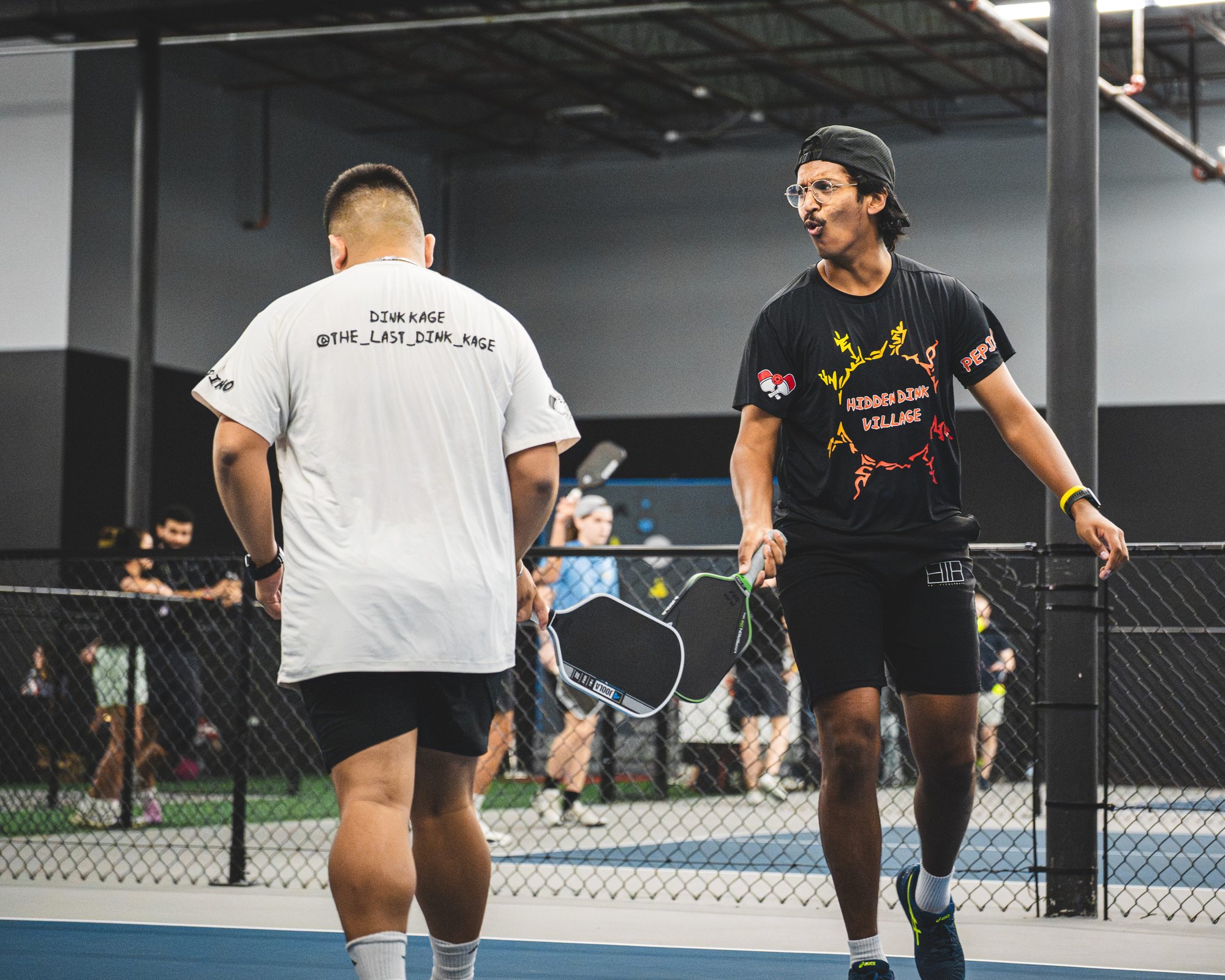
If you’re reading this and weighing options, consider what makes a sports space resonate: its people, its rhythm, and its philosophy. Era Pickleball threads those elements together with care, inviting players to become more than just participants in a sport. They become part of a learning culture that treats improvement as a journey rather than a one-off achievement. The result is a place where you can feel the possibility of becoming better, not simply the likelihood of hitting a win on the next point. That blend of potential and practicality is what keeps players returning, season after season, year after year.
Era Pickleball has carved out a niche that feels both contemporary and timeless. It respects the speed of the game while honoring the patient practice that underpins it. It balances competition with community, all while maintaining a level of professional polish that makes the experience accessible and rewarding. For anyone who has ever stood at the baseline imagining what it would feel like to connect with a shot precisely as intended, Era Pickleball offers a tangible path forward. The court is not a stage for bravado; it is a classroom where technique, strategy, and mental fortitude come together in service of a single, compelling aim: to play better, together.
❧